








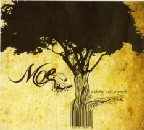
moe.
Sticks and Stones
(Fatboy)
First Appeared in The Music Box, January 2008, Volume 15, #1
Written by John Metzger
Wed January 30, 2008, 06:45 AM CST

moe. may be a jam band at heart, but the group also fully understands the importance of writing songs that can hold their own against its lengthy improvisational sojourns. This approach isn’t new, of course. The Grateful Dead and the Allman Brothers Band, after all, were following a similar path when the members of moe. still were toddling around in diapers. Yet, this concept is one that has been forgotten by many of the outfits currently working within the jam band genre. Consequently, moe.’s emphasis on melodic structure and concision typically has provided a refreshing change of pace from the status quo.
Not surprisingly, though, moe. has faced a nearly identical obstacle as its forbears did to gaining mainstream acceptance. For many, the group’s method of working through its arrangements in a public forum has caused its melodies and lyrics inevitably to become shrouded by its expansive — and, at times, unwieldy — sonic explorations. Nevertheless, beginning with No Doy in 1996, moe. increasingly began to develop a temperament for the studio that stood apart from the one it deployed on stage. Yet, its knack for crafting ridiculously infectious pop-rock songs has continued to go unrecognized.
To its credit, moe. has never lingered in one place for very long, and it continuously has sought fresh approaches to recording its albums. In an attempt to remedy its current predicament and draw attention to its ability to pen a tune, the ensemble retreated to an old church in New England, where it proceeded to write and record material that hadn’t been shaped by the trials and tribulations of the road, thus severing the ties that have bound its studio and concert personas together. This is a tremendously intriguing idea, one that not only is full of promise but also is something to which a lot more jam bands ought to aspire. Although the resulting endeavor Sticks and Stones is a valiant effort, however, it falls more along the lines of Phish’s Farmhouse than the Grateful Dead’s American Beauty. As a result, it doesn’t necessarily provide the answers to the questions that moe. was asking of itself.
Although moe. always has been a bit inconsistent, particularly with regard to its lyrics, its songs overall have benefited from the way in which the outfit has experimented with them in concert. By twisting them in knots and examining them from a variety of angles, it has uncovered its deficiencies and learned how best to mask them. Therefore, the methodology that the group employed on Sticks and Stones isn’t without risk because nearly all of its tracks were developed within the isolated environment of the band’s makeshift recording studio.
Without question, there is a lot to like about Sticks and Stones. For starters, moe. sounds as if it has been liberated by the process that it chose to follow, and it attacks each song with an exuberance that makes its material easy to embrace. Sticks and Stones is a throwback of sorts to the 1970s, a time when albums possessed two distinctive sides, and moe’s music, at its core, has been steeped in the decade’s variegated blues, progressive rock, and pop textures. Yet, rather than play it straight, the band uses its inventive arrangements to jumble the past and blend it with contemporary styles. On opening cut Cathedral, for example, moe. threads The Beatles through ’90s power-pop as well as classic Kansas, while also adding a tickle of bluegrass to its outer edges for good measure. Elsewhere, All Roads Lead Home provides a bridge that connects Jackson Browne’s missives from southern California to the crunchy, Midwestern fare of Son Volt; and within the pensive, funereal march of Conviction Song, the worlds of Pink Floyd and Drive-By Truckers collide.
As Sticks and Stones progresses, however, it becomes increasingly
apparent that moe. is not accustomed to working in this fashion. Its songs are
tight, yet they also are embryonic. The arrangements ultimately begin to feel as
if they have been constructed with too much care and precision. It’s telling
that the best, most memorable moments on the set occur whenever the twin guitars
of Chuck Garvey and Al Schnier push and prod at the melodies, however briefly.
Inevitably though, the set teases and taunts the listener, leaving one to ponder
what might have happened if moe. hadn’t opted to tether itself to such a
restrictive framework. This doesn’t necessarily mean that the group ought to
jettison its ideas and return to its former manner of doing business. moe. just
needs to obtain a little more experience at following a traditional methodology
for recording albums for which Sticks and Stones, at the very least, lays
a solid, if not entirely realized, foundation. 
Of Further Interest...
Widespread Panic - Don't Tell the Band
Sticks and Stones is available from
Barnes & Noble. To order, Click Here!
Ratings
1 Star: Pitiful
2 Stars: Listenable
3 Stars: Respectable
4 Stars: Excellent
5 Stars: Can't Live Without It!!
Copyright © 2008 The Music Box