








From Chaos to Beauty:
The Transformation of The Grateful Dead Movie
An Interview with Susan Crutcher
The Music Box's #1 specialty package for 2004
First Appeared in The Music Box, December 2004, Volume 11, #12
Written by John Metzger

For Susan Crutcher, working on The Grateful Dead Movie proved to be one of the most fulfilling and rewarding experiences of her career, and this past October, she had the opportunity to attend a screening of the picture at the Mill Valley Film Festival in northern California. Also in attendance was vocalist Donna Jean Godchaux, who commented to Crutcher, "There’s nothing like a Grateful Dead concert, and this movie proves that."
"I had never talked with her about how she felt," Crutcher mused from her office in Los Angeles. "It was wonderful to have her reflection, looking back as a band member and seeing it."
"I think we always meant for it to be a document of what it was like to be at a Grateful Dead concert," she explained. "I think it’s a beautiful poem to where the band was and where the fans were at that time. I think that’s the soul of the film, and I think what we were really going for," she added.
When asked about her background prior to getting involved in The Grateful Dead Movie, Crutcher jokingly commented, "I was born."
Yet, there is some truth to her statement. Shortly after graduating from New York University’s film school, she took a job editing political documentaries for a small company in Connecticut before moving back to California to settle in Mill Valley. Said Crutcher, "Mill Valley was one of those places that had this cosmic aura about it. It was an amazing place back then. You could take a walk in the redwoods and hear this amazing music. It would be Carlos Santana rehearsing with his band."
"All around where I lived, all around my house," she continued, "there were these fantastic live bands, and they were all rehearsing. There was this whole aura and chemistry of that time."
"I heard that there was this project that was going to be edited in Mill Valley by the Grateful Dead, but quite frankly, I knew nothing about them." she explained. "I was into jazz and world music. I did a little homework; I listened to some [of the band’s] music; and I thought it was interesting."
Crutcher began working alongside John Nutt, and the two of them initially poured over the more than 100 hours of film that had been captured during the band’s "farewell" concerts at San Francisco’s Winterland Arena in October 1974. Remarked Crutcher, "We had five months to synch up all the little pieces that were not accounted for, log everything, and really get acquainted with what we would have were we to edit [the movie]. That’s very key in a documentary situation."
Meanwhile, the Grateful Dead had been pursuing its options in Hollywood, but everyone the group approached to edit the project declined to get involved. Said Crutcher, "They didn’t want to leave Hollywood, and they felt like the money was shit. They also thought the band was psychedelic and crazy."
"[After synching the footage], I felt like I really understood the phenomena of the Grateful Dead and their followers," she added. "I felt invested — like the whole process of demoting myself to assistant had led up to that moment. So, I just said, ‘how about me?’"
To prove her worth, Crutcher took a 16 mm documentary on the Haight-Ashbury Medical Clinic to the home of Ron Rakow, the president of the Grateful Dead Record Company, and screened the film on the wall of his hallway. Said Crutcher, "I thought it would bore the shit out everybody, but it showed that I could edit something."
"One of the characters came on, and it was Sunshine," she explained. "Sunshine was someone that Jerry [Garcia] knew and really liked, apparently, because when she came on screen, he said, ‘Oh my God, it’s Sunshine.’ The sequence was about her cleaning up from being a heroin addict. At that point, I felt like I had the job — like there was something in the cards for me and this relationship from the beginning," she continued.
In fact, much like the themes of fate and chance pervaded many of the Grateful Dead’s songs, they also seemed to play a role within the making of The Grateful Dead Movie, and the relationships that developed were bound by a strong otherworldly force. As it turned out, Crutcher and animator Gary Gutierrez not only shared a birthday, but also, as Crutcher explained, "were born in the same year, in the same minute, and on the same parallel."
Said Crutcher, "At one point, I was put in the position of asking him when the [animation sequence] was going to be done, and he said, ‘My birthday.’"
"We missed that deadline, of course," she continued, "but when we did have our birthday, we exchanged exact bottles of champagne with one another. Since then, Gary and I call each other on our birthday every year."
Even the flow of The Grateful Dead Movie evolved of its own accord. "It was very organic. We had no script. We had no idea at all what we were doing, quite frankly," she mused.
When asked if she had any hesitations about taking the job, Crutcher broke into laughter and replied, "Absolutely not. I’m totally insane."
Indeed, where many might have struggled in such an unorthodox situation, Crutcher saw it as the ultimate opportunity for exploring her creative instincts. "One thing I was really glad that I did was to trust the camera," she said.
"At that time, I was learning a great deal about music and musicianship. It’s reflective in the choices that I made, meaning how long I stayed with something and when I cut away," she explained. "I was really glad that I did stay with a camera, allowing it to reveal something to us, the audience."
Said Crutcher, "Sometimes, it would be really transcendent just seeing what the seven camera people would do. Sometimes, there was this serendipitous moment where they’d all do the same thing — like they’d all go to the mirrored ball. I’m sure some of them had been dosed, but it was really beautiful. I think the camera work on the film is extraordinary."
Being distanced from the Grateful Dead’s scene was a tremendous asset that allowed her to see the footage for what it was and bring the film to fruition. Said Crutcher, "I think being an outsider is always helpful on any particular project, if it involves a documentary. Some of my favorite films about America were made by foreigners because they can see us with all our ridiculously absurd foibles, but [their films] are not mocking. They are thought-provoking."
Examining the Grateful Dead’s scene from her own fresh perspective allowed Crutcher to observe how the band and its audience shared a symbiotic relationship, one that embraced an entire countercultural movement. "It was very joyous. I think people need to remember that those were very different times. Different, and yet not different in a way. Right now, we’re involved in a war that’s so similar, in my mind, to Vietnam. I guess what’s different is that we don’t have the joyous moments right now that we did have then," she reflected.
"I’ll tell you something that Jerry told me once, which I really appreciated because I wouldn’t have known it otherwise," she added. "He said, ‘when the Haight-Ashbury [scene] was making headlines in Time magazine, [the media] had it all wrong. They didn’t know what was really going on, so what they focused on was free sex, drugs, and music. What was really going on was a kind of underground communication...a community."
Once it was decided which songs worked from both a visual and musical standpoint, and the documentary sequences were constructed, it was Crutcher’s task to piece it all together into a full-length film that told a tale. "We had story points that we wanted to touch upon so certain songs just suggested themselves to opening it up," she explained.
"These songs — Truckin’ and Casey Jones, for example — are so cliched, and they’ve been done so many times. I didn’t have to be a fan to know that. What do we do with it? How do we make this interesting? That was my job as an editor," she said.
The only time Garcia and Crutcher butted heads was in determining the opening sequence for The Grateful Dead Movie. "We had this stalemate on what was going to be the first song in the movie. I was pushing for Uncle John’s Band because we had amazing choices visually. It was beautifully shot. It was an old favorite," she said.
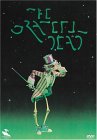
"Jerry, however, felt that the musicianship on the song was really lacking. One of the things we didn’t want to do was replace any instruments or overdub anything. We wanted to keep it live and keep it fresh," she continued. "We were sort of at loggerheads on this. I won’t say that we had come to fisticuffs, but we were really of differing opinions, and I just realized that something has got to give. So I remembered Gary, and I said, ‘how about if we approach the beginning of the movie from a very old-fashioned standpoint, and we have a cartoon?’"
"I had just seen this wonderful film called Frank Film, which is an incredible piece of cutout animation from that time," she explained. "So, I thought, ‘let’s do a cutout animation piece of all the iconography of the Grateful Dead — the skeletons, the roses, the posters, the pictures.’ I was thinking three minutes. We ended up with nine minutes."
It was inevitable that over the course of the project, Crutcher would form a very unique working relationship with Garcia, but what is, perhaps, most interesting is the manner in which she refers to their bond — calling it, at times, "parental" in nature, and at other times "like brother and sister." There were long stretches when he would go out on tour, and Crutcher would be left to make crucial decisions. Though more often than not, her judgement proved to be correct, she didn’t always understand why. "Jerry really respected me for [my creativity]," she said.
Using Playing in the Band as an example, Crutcher explained, "that song, on film, was 56 minutes long. That’s a movie."
"I wanted to represent it and all the beautiful changes in it," she continued. "Like in jazz, there were these moments where we change from one tempo to another, where we change from one mood to another, and I absolutely wanted to preserve those moments because I think they are so indicatively Grateful Dead."
"Jerry would come back from the road, and I’d [hesitantly] show it to him. I wanted him to tell me if I had really fucked up," she remarked. "Usually, I hadn’t. It was interesting. I guess I had a really good ear. I don’t read music. I’m not a musician, but he would tell me why it worked. I guess I had the homegrown, innate chops, but I wasn’t confident. He totally nurtured me and brought that out in me."
"He was incredibly objective about his own musicianship, his own performance. He was fascinated by how it looked. He’d never really seen himself playing or seen the band playing in quite the way we had on film. I think that informed him in a really good way," she said. "He was never narcissistic. He was always pointing out the beautiful musical riffs that everyone else was doing."
"I cannot overstate what an education working with him was," she concluded. "He taught me so much about music, and I hope I taught him something about picture."
Other Reviews
Grateful Dead - The Grateful Dead Movie (DVD)
Grateful Dead - The Grateful Dead Movie Soundtrack
Grateful Dead - Dick's Picks Volume 12: June 26 & 28, 1974 in Providence, RI & Boston, MA
The Grateful Dead Movie is available from Barnes & Noble.
To order, Click Here!
Ratings
1 Star: Pitiful
2 Stars: Listenable
3 Stars: Respectable
4 Stars: Excellent
5 Stars: Can't Live Without It!!
Copyright © 2004 The Music Box