








Confessions of a Pop Music Fan
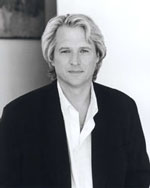
An Interview with Danny Pelfrey
First Appeared in The Music Box, June 2003, Volume 10, #6
Written by John Metzger

I have a confession to make. I’ve been listening to performances by Vanessa Carlton, Stacie Orrico, Vivian Green, India.Arie and — oh, this is so hard to admit — B2K. No, that’s not the confession. But this is: I’ve been enjoying them. There. I’ve said it. I hope you won’t think less of me for it. Please, let me explain. This isn’t the product of sleep deprivation. Nor is it the reluctant acceptance of today’s pop music that comes from the knowledge that, no matter how hard I try, my newborn daughter undoubtedly will succumb one day to peer pressure and groove to a boy band.
Of course the music world has been full of boy bands and girl bands forever. The Beatles was a boy band. As were the Rolling Stones and the Beach Boys. Martha Reeves & the Vandellas was a girl group. So were the Chiffons and the Supremes. And even if the pop music world has gone astray over the past 40 years, the similarities to today are striking.
That’s exactly the point of the recently released soundtrack to the television show American Dreams. It features classic hits such as The Zombies’ She’s Not There, Otis Redding’s That’s How Strong My Love Is, and The Impressions’ People Get Ready. And, right next to them sit Emerson Hart’s terrific theme song (Generation) as well as re-creations by contemporary artists of other brilliant moments from pop music history. Granted, none of the new versions can top the original renditions. That would be impossible. Yet, they fare superlatively well in comparison, and that’s a tough thing to do.
"That’s part of the challenge of the show," said Danny Pelfrey, who produced the new songs and also composed the score of American Dreams. "How do you capture the ’60s and not sound too incongruous? You don’t want to sound trite either."
For those who haven’t seen the program, you’re missing television at its finest. Set in Philadelphia, the show follows the family of Jack Pryor, a small business owner whose daughter Meg dances on American Bandstand. Just as important, however, is the story of Henry Walker, an African-American man who works in Jack’s electronics store. The program debuted last fall and has quickly become one of the finest shows on television, hitting home with both critics and fans. "It’s a family show, and it’s emotional in a lot of good ways. It touches on a lot of good values and things that I think people really identify with," said Pelfrey.
The tales of the two families allow the writers to explore a variety of social and political issues from a deeply personal and frequently emotional perspective, and the change in each of their worlds as well as their overall loss of innocence provides a mirrored backdrop for life in America during the 1960s. Such topics, of course, can be heavy, but the stories from week to week are told in such a family-friendly way that one is easily caught up within the emotional turbulence of the times. Tempering as well as informing the serious nature of the events is the use of pop culture as viewed through eyes of 15-year-old Meg Pryor and her association with American Bandstand. Old footage from the legendary show is spliced into American Dreams, providing a seamless and realistic counterpoint to the contemporary artists who are brought in to portray the entertainers.
"It’s interesting to deal with these contemporary artists," said Pelfrey. "They are very much from today, but they are also aware of their heritage. They are very respectful of the older material, and they have to belong to that while still sounding like themselves."
One example Pelfrey relayed was in regards to Kelly Rowland’s portrayal of Martha Reeves. "Nowadays, [pop artists] tend to sing longer lines, adding, perhaps, a few more notes. [Kelly] would end a line, and sometimes she would just go on a little bit more. We would stop — we both had had that conversation before — and she would say, ‘I know that’s not it.’ By the time we got to the end of the song, she still sounded like herself, but she had adapted her style to make it sound realistic, like it was really done back then."
Rowland’s performance is not included on the American Dreams soundtrack. But those that are featured are quite good. In particular, Duncan Sheik turns in a remarkable rendering of Bobby Darin on Beyond the Sea, and on Come Ye, Indie.Arie is captivatingly transformed into Nina Simone. "It’s like you are hearing these contemporary artists as they would have sounded in the ’60s," Pelfrey stated.
Naturally, Pelfrey provided quite a bit of help. Because the new renditions of the songs needed to fit within the era of the program as well as sit alongside the original songs on the soundtrack — all without sounding out of place — Pelfrey had to painstakingly recreate the ambience and character of the early records. The echo of a drum beat, a particular string arrangement — it’s all been remarkably redone, even though he often wasn’t sure where to begin.
"We’ve been finding our own way, to tell you the truth," said Pelfrey. "We had nothing to go on but our own inventiveness and ears. We’ve been using every piece of old equipment we can find — old microphones, especially — but we also record everything into Pro Tools. "There’s a lot of vintage equipment emulator plug-ins in Pro Tools, and while not the same as the old equipment, you can have a lot more occurrences of them. You can use 20 vintage equalizers, if you want to, even though you might not have that many sitting in a room."
"The danger you run into," Pelfrey cautioned, "is that if you don’t do it just right, it ends up sounding like a lounge band. We had to make sure we did it correctly."
"Fortunately, the artists that we brought in," he continued, "they were all great contributors to that. They were all willing to go there. They were all very into what we were doing."
One person who very much enjoyed what Pelfrey had done with his song was Lamont Dozier, who penned countless hits for Motown including Nowhere to Run, a song made famous by Martha Reeves. "He thought [our interpretation] was great," said Pelfrey.
"Meeting Lamont was like meeting Beethoven. He was at the Kelly Rowland shoot, and we were, of course, peppering him with questions. He’s a really nice man and was really generous with his time and experience," he added.
Of course, this is just the beginning of the massive amount of work Pelfrey must put into each episode of American Dreams. In addition to producing the reconstructed pop songs, he also composes the musical score for each episode. "The songs tell the story in one way, and the score tells the story in another," he said. "They both don’t really interact with each other. I don’t use any of the themes of the songs in my scores."
Indeed, given the attention-grabbing nature of the pop songs, it was necessary for Pelfrey to craft a score that would complement rather than compete with the rest of the music, while still adding flavor. "It’s very understated and very emotional" he said. "[The show] is an American story about an American family, and [the score] very much has a based-in-Americana kind of feeling."
"There are various themes that we’ve developed throughout the season," he continued. "There’s a family theme, and there are various kinds of themes of unrest. Those themes are brought back in to help underscore whatever storyline we are in at the moment, and they evolve as the storylines evolve. As time goes on, they take on a life of their own. The need for them emerges and they almost dictate to you when they should be used and what kind of arrangement technique should be applied."
"The ’60s was a very important time for people who lived through it," concluded Pelfrey. "It was a time of great change and a time that had great meaning in everyone’s life who was a part of it. I think American Dreams has been able to recall that for people, and through the use of contemporary artists, it’s been able to resonate through a new generation."
So there you have it, the explanation for my apparent madness. Thanks to Pelfrey’s insightful understanding, the American Dreams soundtrack really is a terrific collection of songs that seamlessly blurs the line between yesterday and today. True, B2K’s rendition of My Girl can’t really compare with that of The Temptations. Nor can Vanessa Carlton truly replace Dusty Springfield. But that doesn’t make the new versions any less enjoyable to hear. Better still, they might provide some much needed hope for the future of pop music — if only today’s performers take to heart the simplistic nature of these classic songs and creatively begin to craft some magic of their own.
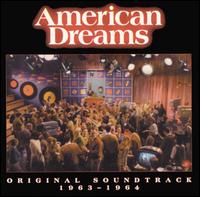
American Dreams Soundtrack — Original Soundtrack (1963–1964) - 
The American Dreams soundtrack is available from Barnes & Noble.
To order, Click Here!
Copyright © 2003 The Music Box